
Weight Loss Medication Delivered to Your Door
Skipping a waiting room sounds great. Skipping medical oversight does not. That is why weight loss medication delivered to your door has become such a practical option for adults who want real treatment, not another round of generic diet advice. For many people, the appeal is simple. You want clinician-guided care, predictable pricing, and a plan that fits your schedule. You may be curious about GLP-1 treatment, interested in lower-dose options, or ready to switch from a provider that has made the process harder than it needs to be. Home delivery can remove friction, but the best programs do more than ship medication. They connect convenience with actual medical care.
Why weight loss medication delivered to your door is growing
Traditional weight loss care can be inconvenient from the start. You call an office, wait for an appointment, take time off work, sit in traffic, sit in another chair, then leave with more questions than answers. That model can work for some people, but it is a poor fit for busy professionals, parents, and anyone trying to manage health without turning it into a full-time job.
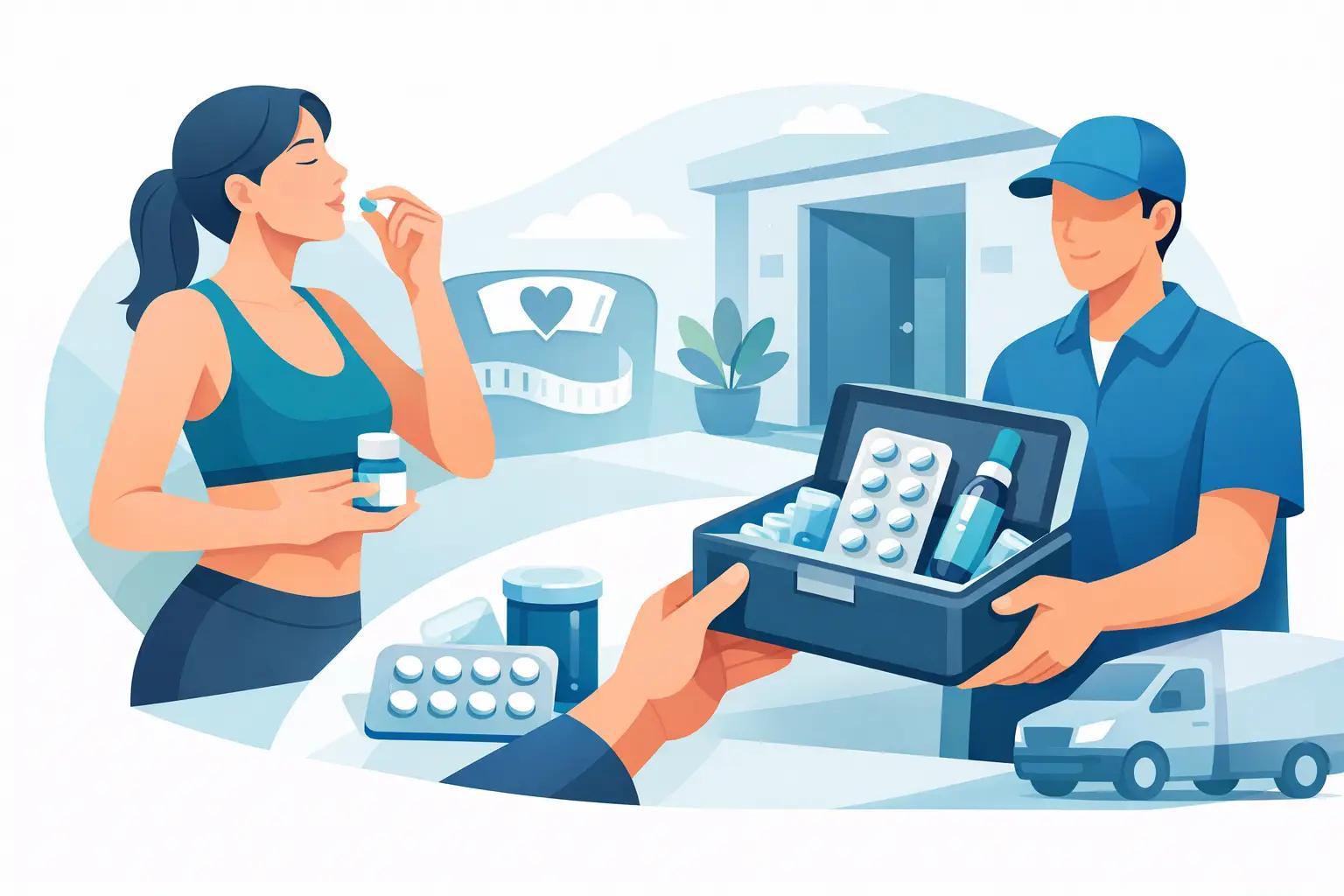
Telehealth changes that. Instead of building your week around clinic visits, you complete a digital intake, share your health history, and have your case reviewed by a licensed clinician. If treatment is appropriate, your medication is prescribed and shipped to your home.
That convenience matters, but it is not the whole story. The real advantage is continuity. Weight loss treatment is rarely static. Doses may change. Side effects may need attention. Progress can speed up, slow down, or plateau. A good remote program makes those adjustments feel manageable instead of frustrating.
What the process should actually look like
The best experience is straightforward. First, you complete an online assessment with your medical background, current goals, and relevant health information. Then a licensed clinician reviews your case to determine whether prescription treatment makes sense for you.
If you are approved, the next step is not guesswork. You receive a plan based on your needs, not a one-size-fits-all package. That can include GLP-1 medication, microdose treatment, or another clinically appropriate option depending on your history and goals. After that, medication is shipped to your door and your care continues with monitoring and dose adjustments over time.
This is where some services separate themselves from the rest. Fast sign-up is nice, but not if the care ends after checkout. A better model keeps clinician oversight in the picture, makes changes when needed, and avoids creating unnecessary obstacles once you start treatment.
Personalized care matters more than fast shipping
Home delivery gets attention because it is visible. The box shows up. The process feels easy. But personalized care is what shapes results.
Two people can have the same goal weight and need very different approaches. One person may do well with a standard dosing path. Another may need a slower ramp because of side effects or sensitivity. Someone new to treatment may want more guidance. Someone switching providers may want continuity without starting over.
That is why the strongest programs do not treat medication like a commodity. They pair access with clinician judgment. Convenience should support care, not replace it.
Who this model fits best
Weight loss medication delivered to your door is especially useful for adults who want medical support without the disruption of in-person visits. If your schedule is packed, if you value privacy, or if you have been putting this off because the process felt too complicated, telehealth can remove the barriers that keep people stuck.
It can also be a strong fit if you are comparing options carefully. Many adults are not looking for the cheapest possible solution. They are looking for clarity. They want to know what they are paying for, whether pricing will change unexpectedly, and what happens if their dose changes over time.
This model is also appealing for people who are already on treatment somewhere else but are unhappy with the experience. Switching should not feel like starting from zero. If your current provider has poor communication, confusing costs, or inconsistent access, a more streamlined telehealth option may be a better fit.
That said, it is not ideal for everyone. Some people prefer face-to-face visits. Others have more complex medical needs that may require in-person evaluation. A trustworthy telehealth provider should be clear about that. Good care includes knowing when remote treatment is appropriate and when it is not.
What to look for before you choose a provider
Not every platform offering home delivery is built the same way. Some make signup easy but leave the ongoing experience vague. Others add subscription layers, changing prices, or limited support that only become obvious after you begin.
A few details matter more than flashy promises. First, look for real clinician oversight. You should know that a licensed medical professional is reviewing your case and adjusting your plan as needed. Second, look for transparent pricing. If the cost changes every time your dose changes, it can make long-term care harder to manage.
Third, pay attention to flexibility. Some patients want traditional injectable GLP-1 treatment. Others are interested in needle-free options or lower-dose paths. A provider that offers more than one route can better match treatment to real life.
Finally, look at commitment. If a company requires an ongoing subscription with unclear terms, ask whether that structure is helping your care or just locking you in. Many adults want support without feeling trapped.
Questions worth asking
Before you start, it helps to ask a few direct questions. Is the treatment plan personalized or standardized? Who reviews your intake? What happens if your dose needs to change? Are follow-ups built into the process? Will the monthly cost stay stable, or can it rise unexpectedly?
Simple answers are usually a good sign. If the explanation feels slippery, the experience often will too.
The trade-offs people should understand
There is no perfect format for care. Home delivery offers convenience, privacy, and efficiency, but it also asks patients to stay engaged. You still need to complete your intake honestly, follow instructions, communicate about side effects, and keep up with your plan.
It also helps to set realistic expectations. Medication can be a powerful tool, but it is not magic and it is not identical for everyone. Response times differ. Side effects can vary. Some people prefer a more gradual approach, especially if they are sensitive to treatment or want a lower-dose option.
That does not make the model weaker. It just means the best results usually come from pairing the medication with a plan you can actually stick with.
Why simplicity matters in medical weight loss
When people give up on treatment, it is often not because they stopped caring. It is because the process became annoying, confusing, or too expensive to trust. Complex systems create drop-off.
Simple care tends to be more sustainable. That means clear next steps, clear pricing, clear communication, and treatment that arrives without forcing you to rearrange your life. It also means support that feels accessible when questions come up, not hidden behind layers of friction.
That is one reason companies like Solyv are gaining attention. The value is not just that medication ships to your home. It is that the entire experience is designed to reduce hesitation while keeping clinical review and personalization in place.
What success looks like with medication delivered at home
For some people, success means meaningful weight loss over time. For others, it starts earlier - fewer food cravings, better consistency, more confidence, and the feeling that treatment finally fits into daily life instead of competing with it.
The most sustainable path is usually the one that feels manageable month after month. Not flashy. Not punishing. Just clear, clinically guided, and realistic.
If you have been waiting for the right moment to get started, this may be the shift worth paying attention to. Weight loss care does not have to begin with a crowded office and a stack of paperwork. It can begin at home, with a real medical review, a personalized plan, and a process that respects your time as much as your goals.
The right treatment should feel like support, not one more thing to manage.